
Honda Pilot may prove more cost-effective than Mazda CX-90 over long-term ownership
The Mazda CX-90 is cheaper upfront and more fuel-efficient, but the Honda Pilot may become more cost-effective over long-term ownership due to slower depreciation and lower expenses.
Article source · Autoblog
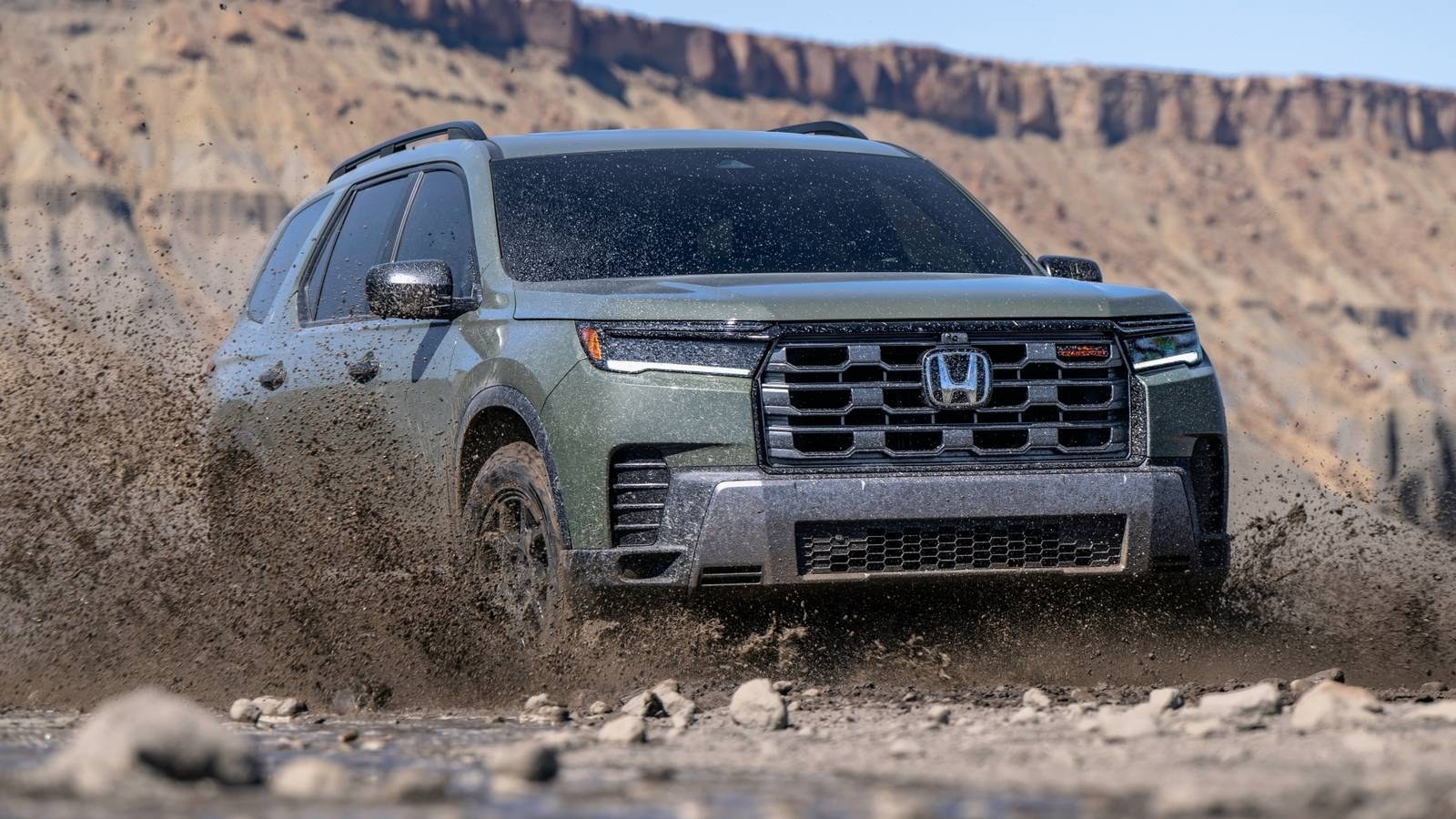
A cost comparison reveals that the Mazda CX-90 offers a lower starting price and better fuel economy, while the Honda Pilot potentially provides more favorable long-term economics. The analysis focuses on the base versions of the 2027 model year for the market, with prices listed in dollars.
The CX-90 is priced at $39,700 before taxes and delivery fees, whereas the starting price of the Pilot is $42,395. The difference amounts to $2,695. According to CarEdge estimates, a Mazda owner driving 24,150 km annually with a 55/45 city-to-highway ratio spends approximately $1,848 on fuel per year.
The Mazda features a turbocharged 3.3-liter inline six-cylinder engine paired with an eight-speed automatic transmission, delivering 280 hp and 450.13 Nm of torque. The CX-90’s claimed combined fuel consumption is 9.41 liters per 100 km. The Honda uses a naturally aspirated 3.5-liter V6 with a ten-speed automatic, producing 285 hp and 355.22 Nm of torque, with a fuel consumption rate of 10.69 liters per 100 km.
However, the 2024 model year CX-90 has 11 open recall campaigns, compared to six for the Pilot of the same year. Among the issues reported for the Mazda are power loss, instrument panel errors, unexpected brake activation, and power steering failure. Consumer Reports predicts that the 2026 CX-90 will be less reliable than the average new vehicle. Mazda’s quality scores over various years range from 65 to 74 out of 100, while the Pilot for the 2023 model year and newer scores between 70 and 81.
According to CarEdge calculations, maintenance costs over the first five years are estimated at approximately $2,639 for the CX-90 and $2,548 for the Pilot. Additionally, Honda’s projected depreciation expenses are $3,156 lower. Thus, Mazda’s advantage in purchase price and fuel efficiency may be more significant for ownership periods of three to four years, but over a longer term, the difference in residual value and potential repairs could tip the scales in favor of the Honda.